Home › Commercial Concrete Contractor Services
Partner with a reliable commercial concrete contractor in New Orleans, LA for your next project. We provide structural concrete, slabs, flatwork, and sitework for retail, industrial, and multifamily properties. Our team is equipped for tight schedules, detailed specs, and coordination with other trades. Request a commercial concrete proposal for your project today.
Superior Concrete New Orleans provides professional concrete contractor throughout New Orleans, LA, Louisiana and the surrounding area. Our licensed, insured crew delivers safe, clean, on-time work with a free estimate before anything begins. Call (504) 226-5854 or request your free quote.
Commercial Concrete Work Built for New Orleans Conditions
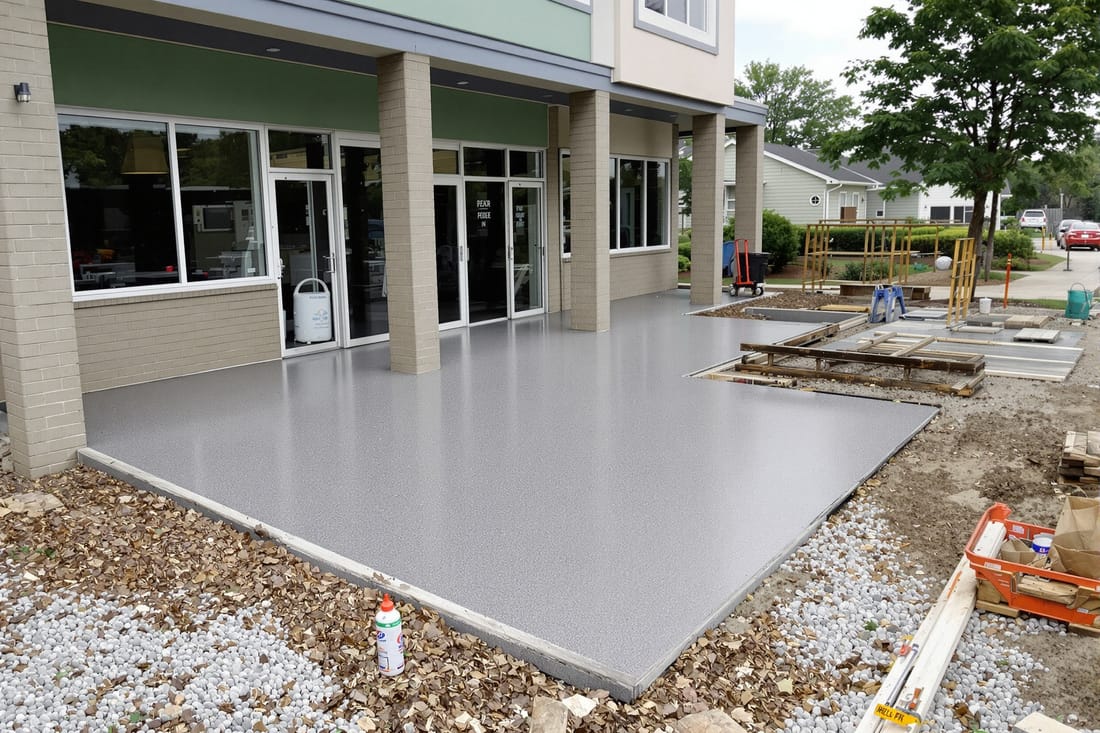
Superior Concrete New Orleans focuses on commercial concrete that can handle our city’s heat, rain, and soft, shifting soils. We are a concrete contractor that understands how Gulf Coast weather, high groundwater, and frequent flooding affect parking lots, loading docks, dumpster pads, warehouse floors, and retail slabs.
When we look at a commercial project, we start with what the site is actually dealing with: existing soil type, drainage paths, traffic patterns, heavy loads, and nearby structures. In many parts of New Orleans, fill dirt is shallow and sits on soft clay or organic material. Instead of guessing, we verify soil conditions and plan slab thickness, reinforcement, and control joints around that reality.
Our commercial clients usually come to us for three things: new construction slabs (retail, restaurants, offices, small industrial), exterior flatwork (parking lots, sidewalks, ADA ramps, drive lanes), and structural features like equipment pads, bollard footings, and retaining walls. We size each element based on how it will be used. For example, a restaurant dumpster pad that takes garbage truck traffic is poured thicker with heavier reinforcing than a standard parking stall.
How Our Commercial Concrete Process Works
Every commercial concrete job with Superior Concrete New Orleans follows a clear process so the project stays predictable for owners and GCs.
1) Site walk and planning: We meet on site with the owner, property manager, or general contractor. We review plans if they exist, look at drainage, locate utilities, and check access for trucks and equipment. In older New Orleans properties, we pay special attention to low spots and existing cracks that point to settlement or bad subgrade.
2) Base preparation: Most premature concrete failures in this area come from poor base prep, not the concrete mix itself. We strip unsuitable material, compact the subgrade, and bring in crushed limestone or similar base when needed. For drive lanes and loading zones, we often use multiple lifts of compacted base so the slab does not pump and crack under traffic.
3) Forming and layout: We set forms to the finished grade, build in slopes toward drains or swales, and double check elevations at doors, thresholds, and curbs so water does not run into buildings. In tight New Orleans lots, we plan truck paths and pump locations to avoid blocking streets more than necessary.
4) Reinforcement and embeds: We install rebar, wire mesh, dowels, and any anchor bolts, sleeves, or embedded plates before the pour. For warehouse and shop floors, we often use doweled control joints and thicker edge beams where forklifts turn.
5) Pouring and finishing: We order concrete mixes that match the use of the slab (often 3000 to 5000 psi), air entrainment when needed, and appropriate slump so we can place and finish efficiently without overworking the surface. For exterior commercial surfaces, we usually finish with broom texture for slip resistance. For interiors, we may machine trowel for a smoother finish or prep for later polishing.
6) Curing and protection: Proper curing is critical in our climate. We use curing compounds or wet cure methods to control moisture loss, then protect the slab from traffic and early overloading. At this stage we cut control joints at planned locations to manage cracking instead of letting cracks form randomly.
Material Options, Finishes, and Local Design Choices
Commercial projects in New Orleans rarely need pretty concrete just for looks. They need the right mix of durability, traction, and ease of maintenance, and we help owners choose finishes with that in mind.
Parking lots and drive lanes: Most businesses choose standard gray concrete with a broom finish. It provides traction in wet weather and does not become slick from algae growth as quickly as very smooth concrete. In shaded areas where mildew and algae are common, we recommend a texture that can be pressure washed without damaging the surface.
Sidewalks and ADA routes: For sidewalks to meet ADA guidelines, we control cross slope and running slope, add detectable warning panels at street transitions when required, and use a medium broom finish that balances wheelchair roll with slip resistance. At storefronts, we often add tooled joints that line up with facade elements so the concrete looks intentional, not random.
Heavy duty pads and floors: Dumpster pads, delivery zones, and equipment pads usually get a higher strength mix, added rebar, thicker sections, and sometimes integral color hardeners where staining is a concern. In food service areas, we consider slope to drains and compatible surface prep for future coatings.
Decorative and branded options: For some retail and hospitality clients, we install stained or integrally colored slabs, exposed aggregate bands, or saw-cut patterns that match brand elements. We are honest about where decorative features make sense in New Orleans, for example avoiding very light, heat-reflective finishes in areas with lots of glare or where dirt and leaf stains are constant.
Cost Drivers and Common Problems We Solve
Commercial concrete pricing in New Orleans is driven mainly by slab thickness, reinforcement, access, base preparation, and finish requirements. A simple sidewalk on firm soil with good truck access costs significantly less per square foot than a thick, reinforced dumpster pad at the back of a tight French Quarter property.
Thickness and load: The more weight a slab must carry, the thicker it needs to be. A basic parking stall might be 4 inches. Truck paths, dumpster pads, and equipment pads can be 6 inches or more with heavy reinforcing. That extra thickness is often cheaper than repairing a failed slab later.
Base and drainage work: Many local commercial sites sit on fill that was never properly compacted, or that has been saturated by years of poor drainage. Fixing this with excavation and base stone is a cost up front, but it prevents sinking, ponding water, and broken concrete that disrupts business.
Access and phasing: In busy New Orleans corridors, we sometimes have to pump concrete from the street, pour at off hours, or phase the work so parking and entrances stay open. That planning and extra equipment affects cost, but it lets the business keep operating.
Common problems we are regularly called to fix include settled walkways that create trip hazards, broken dock aprons where trucks repeatedly hit the same spot, cracked dumpster pads poured too thin, and parking lots that hold water against buildings. We address the cause, not just the surface, which can mean thickened sections, better joint layouts, upgraded base, or adding inlets and slopes so water actually leaves the site instead of sitting on top of the slab.
What New Orleans Owners Should Ask Before Hiring a Concrete Contractor
Before you hire any concrete contractor for commercial work in New Orleans, there are specific questions that protect your budget and schedule.
Ask how they handle drainage and slope. If their plan for a parking lot or walkway does not mention where storm water is going, that is a red flag. Every pour should have a clear path for water in our rainfall patterns.
Ask what thickness and reinforcement they are pricing. Get it in writing. A low bid that quietly uses thinner slabs or less steel often leads to early cracking, especially with garbage trucks and delivery vehicles.
Ask how they will manage access for your tenants or customers during the work. Superior Concrete New Orleans routinely phases pours, sets up alternate walk routes, and coordinates with nearby businesses so you are not surprised by blocked driveways or closed entries.
Ask what curing period they require before allowing traffic and whether that is built into the schedule. Rushing vehicles or heavy loads onto a young slab is one of the fastest ways to shorten its life.
Finally, ask for local commercial references with projects similar to yours, not just any concrete job. A contractor who has poured warehouse slabs in Elmwood, restaurant patios in Mid-City, and small office parking lots in Gentilly will know the quirks of the area and how to keep your project on track.
Superior Concrete New Orleans is set up for this kind of work. We help you understand the tradeoffs in thickness, strength, finish, and schedule so the concrete you pay for actually does what your business needs it to do, for years in our challenging local conditions.