Home › Commercial Concrete Slabs and Flatwork
Get durable, level commercial concrete slabs in New Orleans, LA for warehouses, shops, and retail spaces. We place and finish large concrete flatwork areas including docks, aprons, and sidewalks. Our team uses proper reinforcement, joint layouts, and finishing techniques to reduce cracking and maintenance. Request a bid for commercial concrete slabs and flatwork today.
Superior Concrete New Orleans provides professional commercial concrete slab throughout New Orleans, LA, Louisiana and the surrounding area. Our licensed, insured crew delivers safe, clean, on-time work with a free estimate before anything begins. Call (504) 226-5854 or request your free quote.
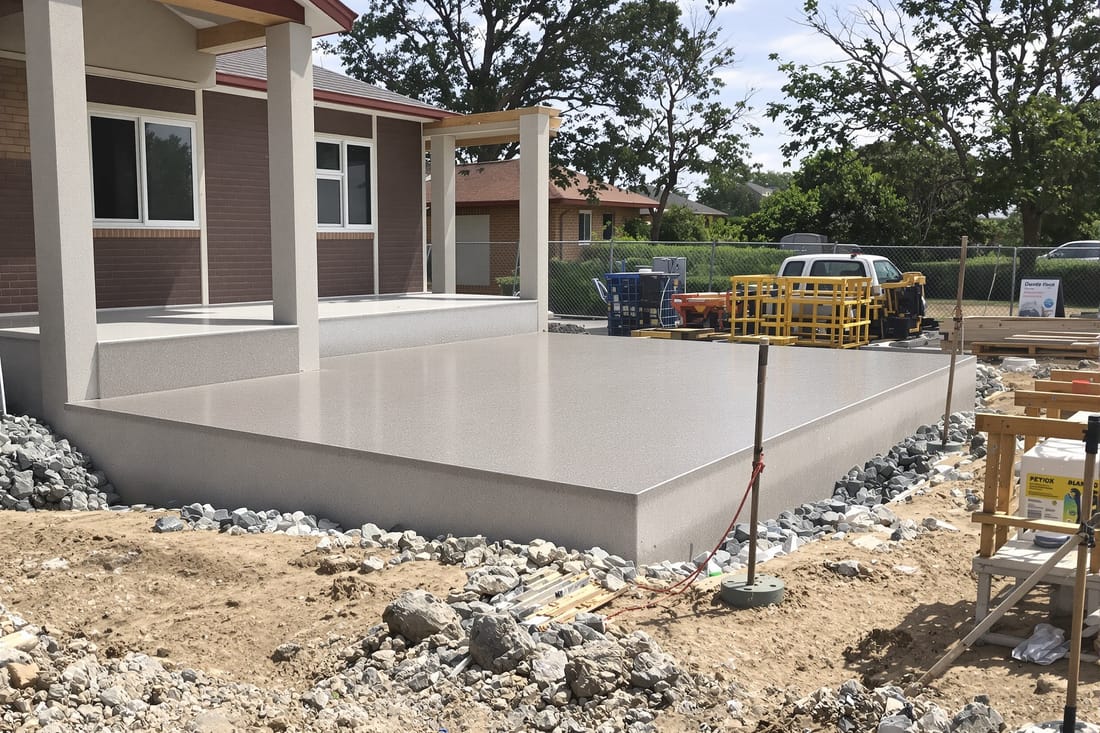
Commercial Concrete Slabs in New Orleans: Built for Heavy Use and Heavy Weather
Commercial concrete slabs in New Orleans are asked to handle a lot: heat, sudden downpours, soil that does not always stay still, and traffic from forklifts, delivery trucks, and customers. At Superior Concrete New Orleans, we design slabs and flatwork specifically for these conditions instead of using a one size fits all approach.
When we look at a new commercial concrete slab project, we start by asking how the slab will be used. A restaurant patio, a warehouse floor, and a drive lane behind a grocery store all need very different thicknesses, reinforcement, and finishes. For example, a light duty pedestrian area might perform well at 4 inches thick with fiber reinforcement, while a loading dock slab that will see semi trucks could require 6 to 8 inches with rebar or welded wire mesh and a stronger concrete mix.
New Orleans soil and groundwater create extra design considerations. Many commercial sites here have soft or variable soils, especially closer to the river or in low lying neighborhoods. Before we pour, we check the existing subgrade, look for organic material and soft pockets, and often bring in a compacted limestone or crushed concrete base to spread out the load. If the soil conditions are more complex, we may recommend a geotechnical engineer to provide a soil report and bearing capacity so we can design slab thickness and reinforcement correctly.
We also pay attention to drainage. Local rain events can drop several inches of water in a short time. For exterior flatwork, that means we must build in enough slope, usually at least 1/8 to 1/4 inch per foot away from buildings and toward drains or swales. On interior slabs, we plan for floor drains, trench drains, or door thresholds so water from cleaning or minor flooding does not migrate where it should not go.
How Superior Concrete New Orleans Builds Commercial Slabs and Flatwork
Our commercial concrete slab and flatwork process is straightforward, but we treat each step as critical to performance and longevity.
1. Site evaluation and layout: We walk the property with you, review your plans or help sketch a layout, and identify access points for trucks and equipment. We mark existing utilities, consider traffic flow, and identify where saw cuts, thickened edges, or footing dowels are needed.
2. Excavation and base preparation: We remove unstable soil and organic material, then place and compact a granular base such as limestone. For most commercial slabs in New Orleans, we aim for 4 to 8 inches of compacted base, depending on load requirements and soil conditions. We use plate compactors or rollers and check for soft spots that need extra attention.
3. Forms, reinforcement, and vapor control: We set forms to the correct elevations so finished slopes and thickness are accurate. For reinforcement, we may use rebar grids, welded wire mesh, post tension cables on specialized projects, or macro fiber reinforcement in the mix. For interior slabs, especially in climate controlled buildings, we often add a vapor barrier or retarder under the slab to reduce moisture transmission through the floor.
4. Concrete placement and finishing: We usually specify at least a 4000 psi mix for commercial concrete slab work, sometimes higher for industrial or food service areas. Our crews place the concrete using chutes, pumps, or buggies depending on access. We screed to level, then float and trowel to the finish appropriate for the use: broom finish for exterior traffic surfaces, hard troweled for warehouse floors, or textured finishes for slip resistance where needed.
5. Joints, curing, and protection: We install expansion and control joints in a planned pattern to help control cracking locations. Saw cutting is usually done within 6 to 24 hours, depending on temperature and set time. Proper curing is essential in our hot and sometimes windy climate, so we use curing compounds or wet curing methods to prevent rapid moisture loss. Finally, we set up protection so no one drives or walks on the slab before it has gained enough strength.
Cost Drivers for Commercial Concrete Slabs in New Orleans
Business owners often ask what really affects the price of a commercial concrete slab. At Superior Concrete New Orleans, we walk through each factor so you can see where your budget is going and where you have options.
The biggest cost drivers are slab thickness, reinforcement type, and access for trucks and equipment. A 6 inch slab that is designed for forklifts and delivery trucks uses 50 percent more concrete than a 4 inch patio slab, and that difference shows up directly in material and labor costs. Reinforcement choice also matters. Rebar installed on a tight grid, such as 12 inches on center each way, takes more time and steel than fiber only or basic welded wire mesh, but in high load or high crack risk areas it can be a smart investment.
Subgrade preparation is another major factor in New Orleans. If your site already has a well compacted base from previous construction, prep might be minimal. If the area is an old grassy lot with soft soil, we may need more excavation, more base material, and additional compaction passes to create a stable platform. This part of the work is often invisible once the slab is poured, but it is critical and a common reason why some cheaper bids end up costing more through repairs.
Project access can increase or decrease costs. A site that allows concrete trucks to back right up to the forms is faster and cheaper to work on. If trucks must stay on the street and we need a pump truck or long hose runs, that adds equipment and labor. Tight downtown locations with limited staging areas, or projects in busy retail centers with restricted hours, also require more planning and sometimes multiple smaller pours.
Finally, finishing and special requirements influence the bottom line. Slip resistant finishes, decorative saw cuts, colored concrete, or specified flatness and levelness tolerances for warehouses all require extra time, specialty tools, or more experienced finishers. We can price multiple options so you can balance performance, appearance, and cost based on how critical each factor is for your business.
Common Commercial Slab Problems Here and How We Prevent Them
Our climate and soil create a predictable set of issues in commercial slabs and flatwork around New Orleans. By planning for them, Superior Concrete New Orleans helps you avoid repairs that often show up a few years after a cheaper job.
Random cracking is the first concern. All concrete cracks to some extent as it shrinks and settles, but uncontrolled cracks across doorways or through aisle ways are both unattractive and sometimes trip hazards. We manage this by using a mix design suited to our temperatures, placing control joints at calculated spacings relative to slab thickness, and reinforcing as needed in high stress areas such as corners, re-entrant corners around columns, and at slab transitions.
Settlement and voids are another local issue, especially in areas that have had previous fill dirt or are near old utilities. To reduce risk, we compact the base in layers, address any soft spots before we pour, and sometimes recommend a thicker slab edge or integrated footings. If we suspect ongoing subgrade movement, we may suggest alternative approaches, such as thicker reinforced slabs or designs that make future mudjacking or slab lifting easier if needed.
Moisture problems can show up as curling edges, surface scaling, or flooring failures over interior slabs. Our approach includes checking drainage around the building, considering vapor barriers under interior slabs, and choosing appropriate curing methods. For spaces that will receive epoxy, tile, or other moisture sensitive finishes, we can coordinate with your flooring contractor on moisture testing and schedules to reduce the chance of bonding problems or efflorescence.
In exterior commercial flatwork such as sidewalks, dumpster pads, and drive lanes, deicing salts from nearby parking lots or standing water can shorten the life of concrete. We address this by choosing the right air entrainment, using appropriate mix designs, providing adequate slope for drainage, and recommending periodic sealing where it will add value.
Planning Your Commercial Concrete Slab Project With Us
Getting a commercial concrete slab or large flatwork area done in New Orleans involves more than just booking a pour date. Superior Concrete New Orleans helps you think through timing, permitting, and coordination so the concrete is ready when the rest of your project needs it.
Timing is important because of our weather. High heat and sudden storm cells are normal here. We try to schedule pours early in the day to avoid peak temperatures, which helps reduce rapid evaporation and surface cracking. If forecasts show heavy rain, we would rather reschedule than risk surface damage or weak spots caused by water on fresh concrete. For some projects, especially in hurricane season, we build in flexible windows instead of a single fixed date, so your schedule is realistic.
We can coordinate with general contractors, utility crews, and other trades. That might mean leaving blockouts for future plumbing or electrical, doweling into existing foundations, or planning pour sequences so steel erection or equipment installation can begin as soon as sections of slab have reached adequate strength. For busy retail or hospitality sites, we can phase the work so parts of your property remain open, with clearly marked work zones and safe access routes for customers.
If you are early in planning and only have rough dimensions, we can provide budget pricing for your commercial concrete slab so you can compare options and refine your design. Once plans are clearer, we can move to a detailed proposal that includes slab thickness, reinforcement type, joints layout approach, finish type, and a realistic project timeline.
Whether you are building a new warehouse, expanding a loading dock, or replacing failing flatwork around your business, our goal is to leave you with a commercial concrete slab that functions the way you need and holds up in New Orleans conditions for years. When you are ready to talk specifics, we are happy to visit your site, review your ideas, and explain exactly what it will take to get it built right.