Home › Concrete Foundations and Footings
Ensure your project starts right with properly engineered concrete foundations in New Orleans, LA. We pour concrete footings, foundation slabs, and stem walls for new homes and additions. Our team follows local codes and uses quality reinforcement to handle soil and moisture conditions. Schedule a free estimate for concrete foundations and footings today.
Superior Concrete New Orleans provides professional concrete foundations throughout New Orleans, LA, Louisiana and the surrounding area. Our licensed, insured crew delivers safe, clean, on-time work with a free estimate before anything begins. Call (504) 226-5854 or request your free quote.
Concrete foundations built for New Orleans soil and storms
When you hire Superior Concrete New Orleans for concrete foundations and footings, the first thing we look at is your ground, not your floor plan. New Orleans has a mix of soft, marshy soils, filled sites, and older neighborhoods with buried debris. Before we design anything, we walk the lot, check drainage patterns, look for standing water, locate utilities, and talk through the type of structure you are building (house, garage, addition, shop, or light commercial).
From there, we decide whether a standard spread footing, deepened footing, or pier and grade beam system makes the most sense for your site. In many parts of New Orleans, it is smarter to transfer loads a little deeper to reach more stable soil and to design wider footings to resist settlement in wetter seasons. We also take into account flood elevation requirements and local building codes so you do not run into issues when you go to pull permits or get inspections.
We explain your options in plain language. If the lot is on higher, firmer ground, you may be fine with conventional footings under a slab-on-grade. If the lot has poor drainage or noticeable soft spots, we might recommend thickened edge beams, interior grade beams, or structural slabs tied into piers. The goal is always the same: a foundation that will not crack excessively, tilt, or heave every time the water table changes or a storm pushes through.
Foundations in New Orleans also have to deal with termites and moisture. We coordinate with your pest control provider for pre-treating the soil where required, and we detail vapor barriers and insulation correctly under and around the slab. These steps do not show once the house is built, but they make a big difference in long-term performance and comfort.
Step-by-step: how we pour concrete foundations and footings
A durable concrete foundation is all about sequence and attention to little details. Superior Concrete New Orleans follows a consistent process so nothing important gets skipped.
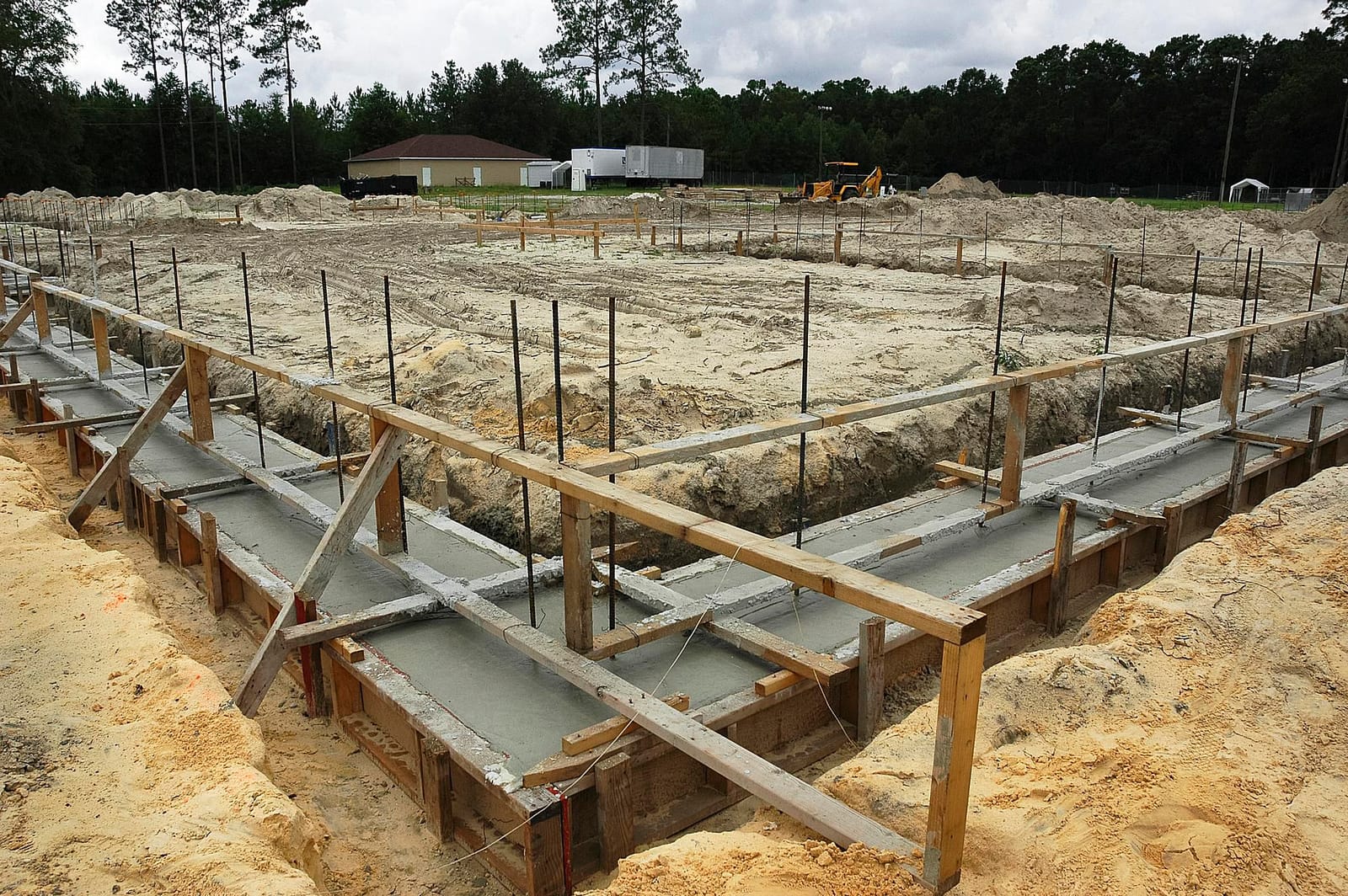
First is layout and excavation. We use your engineer’s or architect’s plans to set batter boards and strings that mark where every footing and thickened slab edge will go. We double-check distances to property lines and setbacks to avoid survey issues. Then we excavate to the design depth, typically to undisturbed native soil, and clean the trench bottoms of loose material and organic matter. If we hit soft, pumping soil, we over-excavate and replace it with compacted crushed stone or stabilized fill so the footing does not sit on mud.
Next we handle base prep. For most foundations we place a compacted gravel or crushed concrete base under slabs. This gives better drainage and a more uniform surface for the concrete. On the interior slab areas we install a heavy-duty vapor barrier, taped at all seams and turned up at the edges around plumbing penetrations.
Rebar comes after the base prep. We tie reinforcing steel in the footings according to the engineer’s schedule, typically continuous longitudinal bars with proper hooks at corners and vertical dowels that tie into the stem walls or slab. We use concrete chairs or dobies to hold the bars at the correct height so they end up inside the concrete cover, not sitting in the dirt. For slabs, we lay out a rebar grid or welded wire mesh, and we add extra reinforcement at point loads like columns, load-bearing walls, and heavy equipment pads.
Formwork is then built to correct dimensions and elevations. We check top-of-slab elevations with a laser and adjust forms so water will drain where you want it. We also set anchor bolts, hold-downs, or embedded plates before the pour so they cure into the foundation exactly where your framer or steel contractor expects them.
Finally, we pour and finish. We schedule our pours for cooler parts of the day when possible, especially in the summer, and we use mix designs suited for our humid, coastal climate. During the pour we vibrate and rod the concrete in footings to remove air pockets, screed slabs to the proper level, and then trowel or broom-finish the surface depending on whether the slab will be covered or left exposed. Curing starts immediately after finishing to keep the concrete from drying out too quickly in the Louisiana heat.
Foundation choices for new homes, additions, and garages
Concrete foundations in New Orleans are not one-size-fits-all. Superior Concrete New Orleans helps you pick a system that fits your structure, your lot, and your budget.
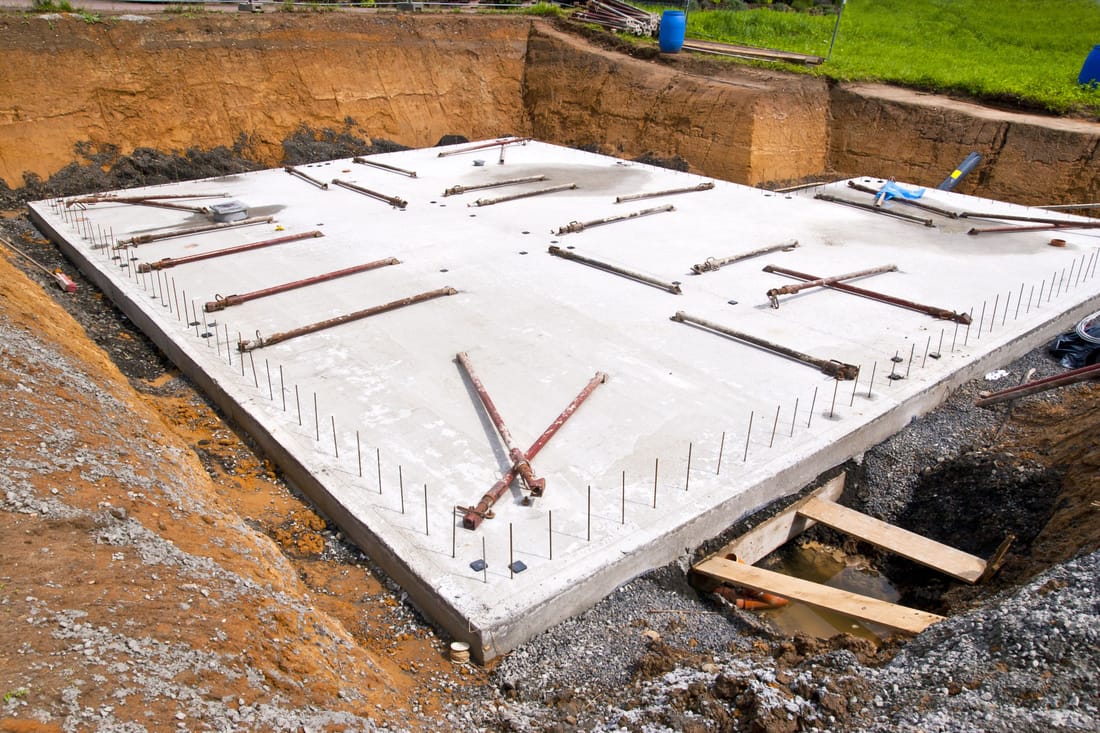
Slab-on-grade foundations with perimeter footings are common for single-family homes, garages, and workshops. In this setup, a monolithic pour may be used, where the thickened edge footing and the interior slab are poured at the same time. This reduces labor and joints but needs careful forming and rebar placement. For heavier structures or poor soils, a separate footing and stem-wall system might be a better choice so we can build up above weak surface layers before placing the slab.
For areas with higher flood risks or where you want a raised floor, we may recommend a pier and grade beam foundation. Concrete piers, sometimes drilled and sometimes formed in excavated holes, carry the load down to deeper soil. Grade beams, which are reinforced concrete beams connecting the piers, spread the loads and support either a structural slab or a framed floor system. This type of foundation costs more than a simple slab, but it can perform better over time in soft soils and gives you elevation above minor flood events.
Detached garages and accessory buildings often use a slightly different approach. Because they can have concentrated loads from vehicles, lifts, or equipment, we may thicken interior areas or add isolated footings under future load points. If you plan to install a car lift or heavy machinery later, it is cheaper and easier to design for those loads now and add extra reinforcement or depth where needed.
We also install foundation pads and footings for light commercial structures, covered parking, canopies, and equipment. For these we work off structural drawings that may call for higher strength concrete, additional rebar, or specific anchor layouts. Whatever you are building, we take the time to align the foundation design with how the structure will really be used so you do not end up cutting and reworking concrete down the road.
What affects cost and schedule for concrete foundations
Customers often want to know why one foundation quote is higher than another. For concrete foundations and footings in New Orleans, several site-specific factors drive price.
Soil conditions are the biggest factor. A straightforward dig into firm, dry soil is the most economical. If your lot has very soft clay, organic fill, buried debris, or a high water table, we may need deeper footings, over-excavation with compacted base, or a pier and grade beam system. All of these add material, labor, and sometimes engineering time, but they reduce the risk of settlement and structural issues later.
Access is another big driver. If we can reach the footing area with a concrete truck and excavation equipment, work goes faster. Tight backyards in historic neighborhoods, spots behind existing structures, or lots with large trees and utilities may require smaller machines or even hand digging and wheelbarrows. We walk your site before finalizing a quote so there are fewer surprises.
The amount and type of reinforcement also affects cost. A simple garage slab with minimal rebar is less expensive than a heavily reinforced foundation with grade beams, dowels, and numerous anchor bolts or hold-downs. Engineering requirements, design loads, and local wind or flood codes determine how much steel we must use.
Season and weather matter in New Orleans too. We can pour concrete year-round, but heavy rain and hurricane season can slow the schedule. Spring and fall often provide the smoothest timelines since the temperatures are moderate and afternoon storms are less intense. In the hot summer months, we may recommend early morning pours, water curing, and admixtures that slow down set times to help with finishing quality. These adaptive steps may add a bit to labor but reduce the chance of surface defects.
Finally, coordination with other trades influences timing. Plumbing rough-in, underground electrical, and termite treatment all need to be in place before we pour a slab foundation. We help you schedule these pieces so the project moves steadily and no one is waiting around on the others.
Common New Orleans foundation issues and how we prevent them
New Orleans foundations face a specific set of challenges: soft and variable soils, lots of rain, periodic flooding, and intense heat. Superior Concrete New Orleans builds concrete foundations and footings with these local realities in mind so problems are less likely to show up a few years after construction.
Settlement cracks are one of the most common homeowner complaints. Many of these are caused by inadequate soil preparation or undersized footings. To reduce this risk, we insist on removing topsoil and organic material beneath footings, compacting subgrade properly, and using footing sizes that match your soil and structure loads. When we see signs of fill that was not properly compacted, we address it before placing concrete instead of hoping it will be fine.
Moisture and vapor issues are another concern. Without a good vapor barrier and proper slab detailing, you can end up with damp floors, musty smells, or flooring adhesive failures. Our standard practice is to install thick poly vapor barriers under interior slabs, seal around penetrations, and maintain correct slab elevation relative to surrounding grade so surface water flows away from the building, not toward it.
Corrosion and concrete deterioration can be accelerated near the Gulf Coast because of humidity and, in some areas, salt exposure. We maintain proper concrete cover over rebar, use quality mixes with adequate cement content and low water-to-cement ratios, and follow good curing practices. For foundations in particularly aggressive environments, we can work with your engineer to specify additional protective measures like higher strength concrete or coated reinforcement.
Improper placement of anchor bolts and hold-downs is a smaller issue but can cause big headaches for framers and inspectors. We carefully lay out and secure all embedded hardware before and during the pour, then double-check locations against the framing plans. This reduces field modifications, extra drilling, and delays during framing.
Before you hire any foundation contractor in New Orleans, ask how they evaluate soil, what reinforcement they typically use, and how they plan to cure the concrete in hot and wet conditions. A clear, specific answer to those questions will tell you more than a low-price estimate ever will. Our crews at Superior Concrete New Orleans are used to working in this climate and on these soils, and we design and build foundations that are realistic for the way the ground here behaves.