Home › Concrete Slab Installation
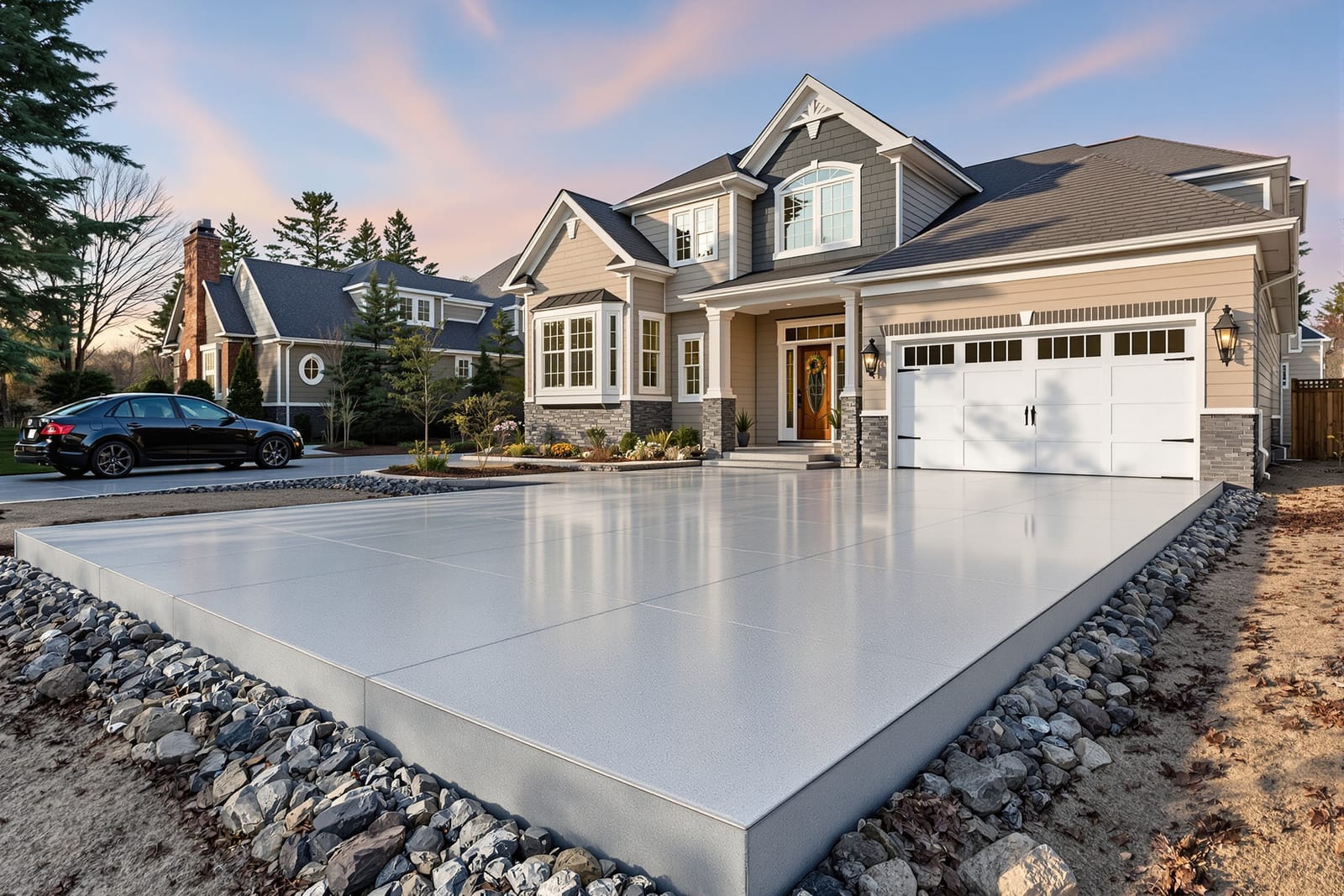
Get a level, long-lasting concrete slab in New Orleans, LA for your house, shed, patio, or garage. We handle site prep, forms, reinforcement, and finishing so your concrete floor slab performs for years. Our team pours foundation slabs and smaller shed slabs with the right thickness and reinforcement for each use. Request a free concrete slab installation quote today.
Superior Concrete New Orleans provides professional concrete slab throughout New Orleans, LA, Louisiana and the surrounding area. Our licensed, insured crew delivers safe, clean, on-time work with a free estimate before anything begins. Call (504) 226-5854 or request your free quote.
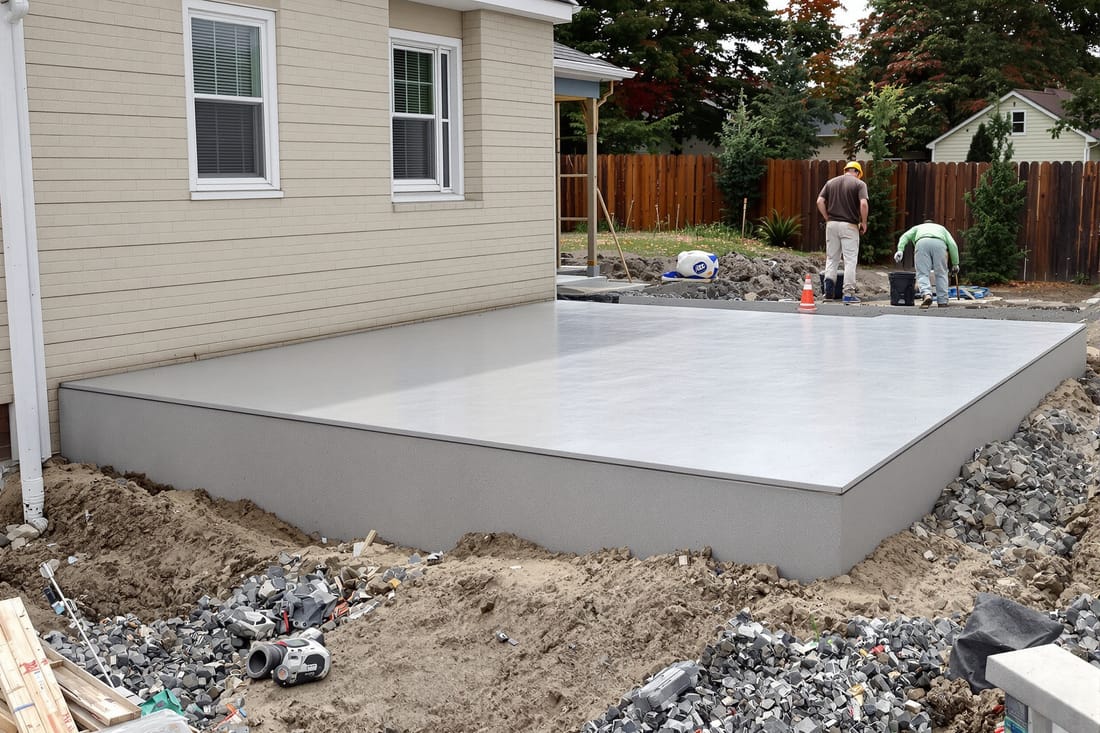
Concrete slab installation tailored to New Orleans homes and soil
Superior Concrete New Orleans installs concrete slabs that are designed specifically for our city’s soft, moisture‑prone soils and heavy rain. Before we quote anything, we visit your property, take basic elevations, and look for signs of past flooding or settlement. In many New Orleans neighborhoods the soil profile can change in just a few feet, so we do not rely on a one‑size‑fits‑all slab thickness or reinforcement pattern.
We start by confirming how the slab will be used. A parking slab for a work truck in Gentilly needs a different design than a small patio in the Marigny. For vehicle slabs we often recommend a thicker section and tighter rebar spacing to keep the surface from cracking and rutting where the tires sit. For patios or walkways we can usually use a slightly thinner slab, then spend more time focusing on drainage and a clean finish.
We also pay attention to nearby structures and property lines, which is important in New Orleans where lots are narrow. If the slab is going near your house or neighbor’s fence, we plan expansion joints, isolation joints, and proper clearances so movement in the slab does not push against existing foundations or walls. Our goal is a slab that carries its load, manages water correctly, and stays stable in our local conditions.
Our step‑by‑step concrete slab installation process
When Superior Concrete New Orleans installs a concrete slab, the work follows a clear sequence so you always know what is happening and why.
1. Site evaluation and layout: We mark the slab footprint with paint and string lines, verify dimensions, and check for utilities. In parts of New Orleans where services are shallow, we may request a utility locate to avoid damaging water or gas lines.
2. Excavation and subgrade prep: We strip grass, roots, and organic material, then excavate to the designed depth. The subgrade is shaped to slope gently toward planned drainage paths. We then compact the soil in layers using a plate compactor or roller. In softer areas like Lakeview or near the lakefront, we may add extra compaction passes or a thicker base to reduce future settlement.
3. Base material and moisture barrier: For most concrete slab projects we install a layer of crushed limestone or similar aggregate, then compact it. This base helps spread loads and reduce heaving. For interior slabs, covered patios, or slabs under living space, we typically add a plastic vapor barrier to reduce moisture migration through the concrete.
4. Forms and reinforcement: We set sturdy wood or metal forms to the correct elevation, using stakes and braces so the edges stay straight when we pour. Reinforcement is installed next, usually a grid of rebar or wire mesh spaced according to the slab’s use. For driveway slabs we often use rebar on chairs to keep it centered in the slab, not lying on the ground, which is essential for crack control.
5. Concrete placement and finishing: We schedule the concrete delivery so it arrives when the crew is ready. The mix is placed, spread, and leveled with screeds and bull floats. As the surface sets, we may use hand trowels or power trowels depending on the finish you want. Control joints are cut at planned locations to guide natural shrinkage cracking.
6. Curing and final touches: Proper curing is key in our hot Louisiana climate. We may use curing compounds, coverings, or regular light water misting to slow evaporation and improve long‑term strength. Finally, we clean up the site, remove forms, and review the slab with you so you understand curing times and when it is safe to walk or drive on it.
Design choices for your concrete slab, from thickness to finish
A durable concrete slab in New Orleans is the result of several design choices, not just pouring a standard mix. Superior Concrete New Orleans walks you through each of these decisions so the slab matches both your use and your budget.
Thickness: For light‑duty patios and walkways, 4 inches is typical, provided the base is well compacted. For driveways or parking areas that will see SUVs or work trucks, we often recommend 5 to 6 inches. In some cases, like RV parking or boat pads, we may thicken only the tire paths to control cost while still handling higher loads.
Reinforcement: We explain the tradeoffs between welded wire mesh and rebar. Wire mesh can work for smaller slabs that carry light loads, but rebar offers more control of cracking and deflection for heavily used surfaces. In flood‑prone areas where the soil can soften, we usually favor rebar grids to help keep the slab intact even if the ground moves slightly.
Concrete mix and strength: For most exterior concrete slabs we use a mix in the 3,000 to 4,000 psi range. We can adjust the mix design to balance workability and durability in our humid climate, and may recommend air‑entrained concrete for exposed slabs that see occasional cold snaps to reduce surface scaling.
Finish and appearance: Standard broom finishes work well for driveways and pool decks because they add traction when wet. For patios, we can provide a smoother trowel finish if slipperiness is not a concern, or apply texture and saw‑cut patterns. Color integrally mixed into the concrete or surface stains can help your new slab blend with historic New Orleans brick or stucco. We also plan the placement of joints so they align with doors, columns, or existing lines in your yard to keep the slab visually neat.
Local conditions, drainage, and permitting in New Orleans
New Orleans has its own set of challenges when it comes to concrete slab installation, especially drainage and elevation. Superior Concrete New Orleans is familiar with the city’s low elevations, high water table, and frequent heavy rain, so we design each slab with water movement in mind.
Slope and drainage: We typically build a gentle slope into exterior slabs so water runs away from house foundations and toward approved drainage points. Where possible we tie into existing yard drains or add simple surface drains, and we avoid creating low spots that could hold water against your home. For pool decks and outdoor kitchens, we balance drainage needs with comfort, so chairs and grills sit level but runoff still has a clear path.
Nearby structures and flood zones: In many parts of the city, properties lie in designated flood zones. While a typical flatwork slab may not require complex elevation certificates, it is still important to avoid changing drainage patterns in a way that affects neighbors. We look at existing grades and in some cases recommend low curbs or channels to keep water away from doors and crawlspaces.
Permits and inspections: For simple residential flatwork, New Orleans often allows work under minor permits, but driveway aprons that tie into the sidewalk or street may require city approval. If your project touches the public right of way, we coordinate with you so you know what is needed. In historic districts or under HOA rules, there may be appearance or material guidelines for front‑facing slabs and driveways, which we can help you navigate before any work begins.
What affects the cost of a concrete slab in New Orleans
Concrete slab pricing is driven by more than just square footage. Superior Concrete New Orleans provides clear, itemized estimates so you understand exactly what you are paying for and where you might adjust scope to fit your budget.
Access and site conditions: Tight side yards and limited alley access, common in older New Orleans neighborhoods, can affect how we bring in materials. If we have to wheelbarrow long distances or pump concrete, that will influence cost. Sites that need extra excavation, tree root removal, or demolition of old concrete will also require more labor and hauling.
Thickness, reinforcement, and base: A thicker slab with rebar on a deep compacted base costs more upfront, but often saves money in the long run by reducing cracking and settlement. We can quote options so you see the difference between a basic slab and a more robust design suitable for heavier loads or more challenging soil.
Finishes and details: Decorative finishes, coloring, saw‑cut patterns, and integrated steps or footings add time and materials. Drainage solutions like channel drains, integrated curbs, or tie‑ins to existing drainage also affect pricing but can protect your home and landscaping from water damage.
Scheduling and timing: Large pours or complex projects may benefit from being done in cooler parts of the day so we have more working time before the concrete sets. If your project requires night or weekend work because of business hours or HOA noise restrictions, we factor that into the proposal as well.
We always explain these cost drivers in plain language, so you can decide where it makes sense to invest and where you can keep things simple without sacrificing performance.
Why homeowners trust Superior Concrete New Orleans for slab work
Choosing the right contractor for concrete slab installation in New Orleans is the difference between a surface that looks good for a year and one that performs for decades. Superior Concrete New Orleans focuses on building slabs that fit the way you live, not just what is easiest to pour.
We start every project with a conversation about how you plan to use the space: parking, entertaining, storage, or supporting future structures like sheds or carports. This guides our recommendations for thickness, reinforcement, and finishes. We discuss expansion joints, control joints, and drainage in advance, so there are no surprises when you see the final layout.
Our crews are used to working in tight city lots and older neighborhoods, and we take care to protect landscaping, fences, and adjacent structures. Throughout the project, we keep you informed on timing, what to expect on pour day, and curing steps so you know when it is safe to walk, move furniture, or drive on the new slab.
After installation, we review simple maintenance steps that help your slab last longer in our climate, such as avoiding de‑icing salts, managing heavy point loads, and keeping gutters and downspouts directed away from slab edges. If you ever have questions about small cracks, sealing, or adding structures on top of your concrete later, we are available to walk you through the options.
With Superior Concrete New Orleans, you get a local team that understands New Orleans soil, rainfall, and neighborhoods, and treats your project like part of the long‑term structure of your property, not just another pour on the schedule.